STORIES FROM PAFA
State-of-the-Art Digital Lab Supports Students Art Careers
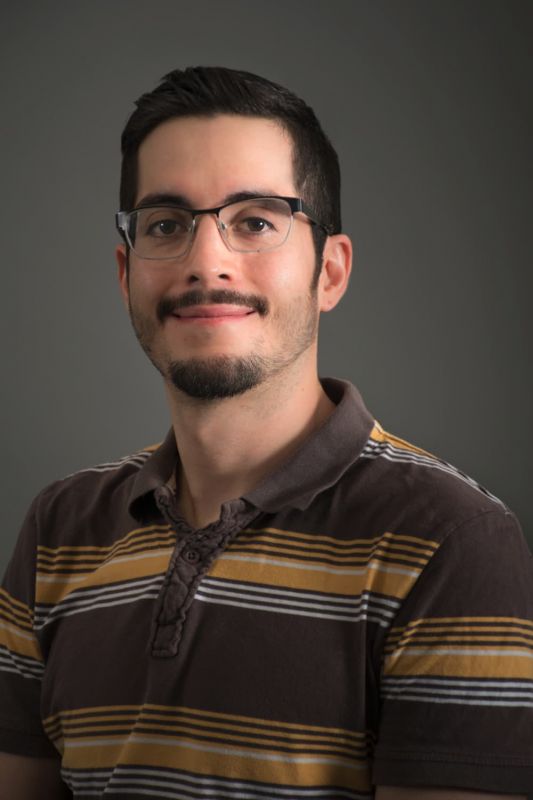
Adrian Cubillas uses his knowledge of museum-quality imaging to help PAFA’s students get high-quality images of their artwork for documentation, applications, and printing. Having previously worked at the Philadelphia Museum of Art doing photo documenting, he knows how to take images of the highest standards.
As the Digital Studio Technician, Cubillas helps students get the most out of PAFA’s digital labs. The labs, housed on the recently-renovated 5th floor, allows students access to the computer, printing, and lighting equipment they need to take and edit their artwork.
“This is very unique. It’s like teaching, but also like being the manager of a running photography studio,” he says about his role.
Cubillas teaches four workshops each semester, generally in conjunction with specific undergraduate and graduate classes that are designed to prepare students for professional practices. The undergraduate “Thesis Seminar” and the MFA class “Studio and Beyond” give students real-life entrepreneurial skills in how to move forward in their art careers. Learning how to document artwork is an important component of that training.
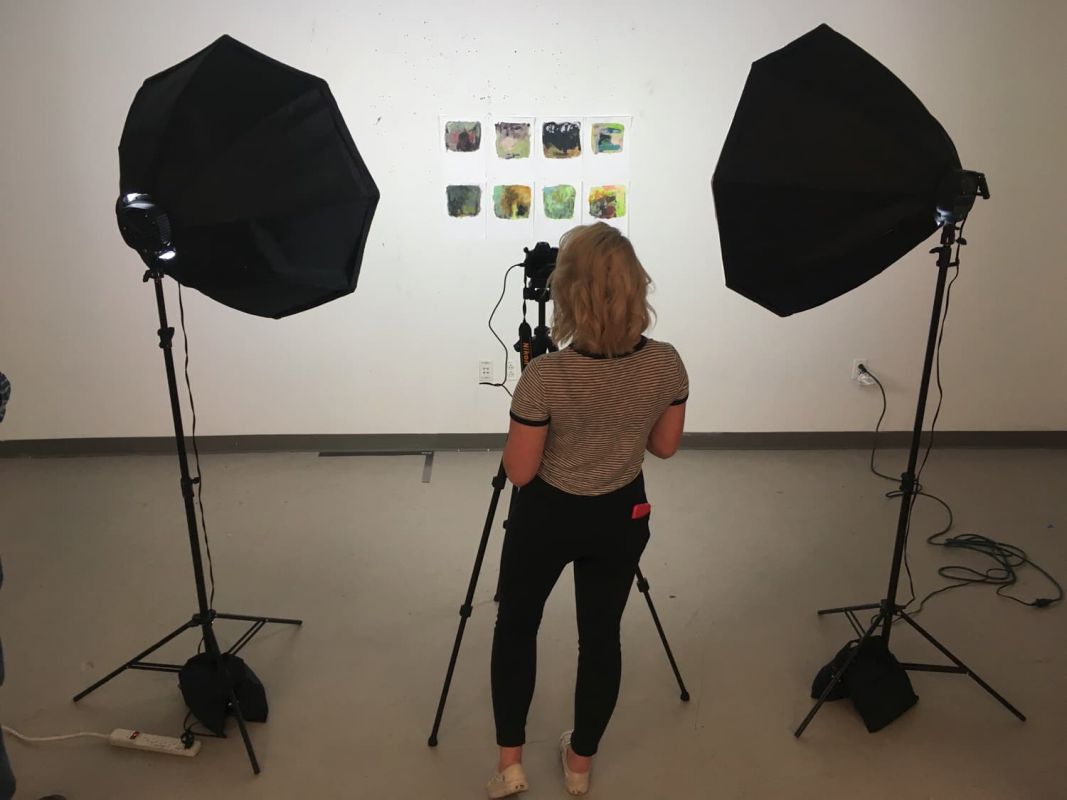
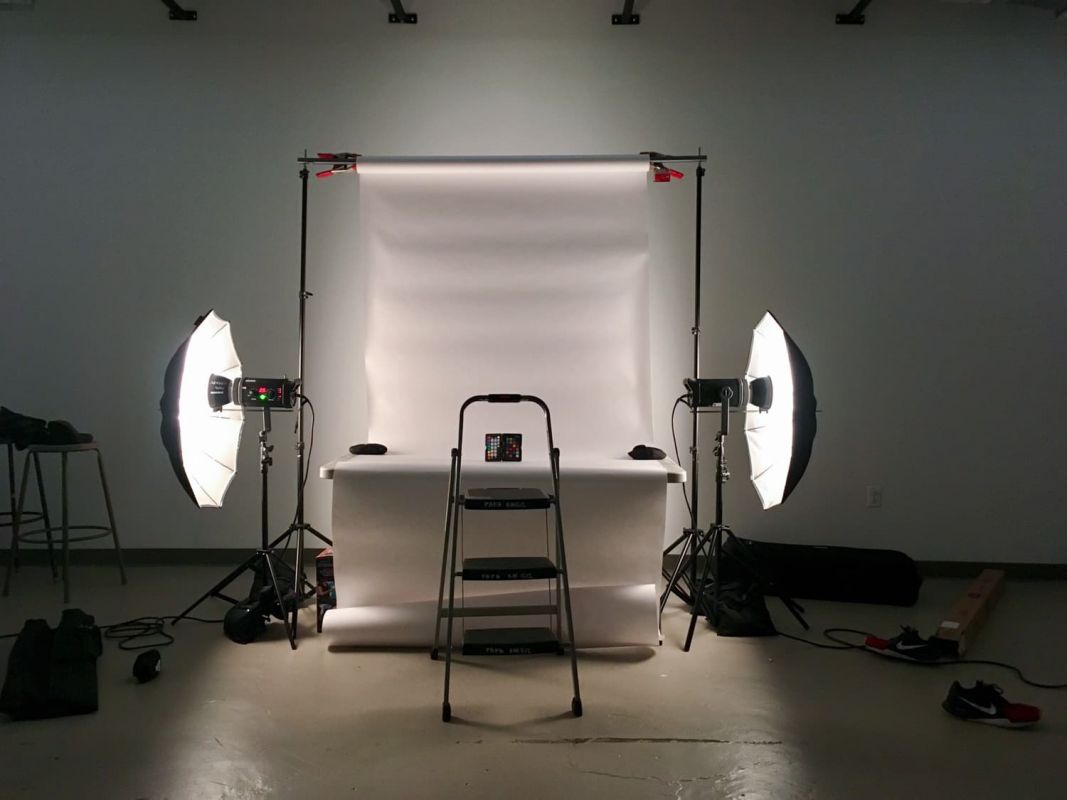
The digital labs at PAFA are equipped with 47 Mac desktops with full Adobe Creative Suite, three Cintiq interactive tablets, a variety of digital cameras and DSLRs, along with two professional lighting kits good for a variety of hard and soft lighting situations. To digitize small works, there is a copy stand to photograph images more easily.
This equipment can be checked out for free, and the labs are open to the students 24 hours, seven days a week.
In addition to the media lab, the printing lab has a large-format Epson printer for larger prints and printing on canvas. MFA Student Melissa Joseph used the large-format printer for her 2018 thesis show. With Cubillas’ help, Joseph was able to find an Indian silk online that was compatible with the printer and allowed her to make customized fabric prints for the Annual Student Exhibition.
PAFA is unique in teaching its fine arts students how to be self-sufficient in documenting and editing their own artwork. Many students apply to shows, grants, and residencies throughout their time in school, and the training Cubillas provides allows them to be self-sufficient and save the money it would take to hire outside photographer.
He also teaches students how to use Photoshop, Bridge, and Lightroom to do post-production.
“Post-production brings the magical moments,” Cubillas said. “Students think they don’t have the right captures, but they can always fix it. They’re stressed and they’re worried, but as long as you have a sharp image you can fix those things.”
Ha Ninh Pham (MFA ’18) used the Media Lab extensively while in school. “I spent a lot of time on the 5th floor. I used the library’s computers, the media lab, and the printing lab. I borrowed a lot of equipment. I didn’t have this equipment when I was in Vietnam. I took pictures with my camera, which is a good camera, but I didn’t have studio lights and studio set-up.”
Pham credits the images he was able to capture in the media lab with getting into the Skowhegan School of Painting and Sculpture Residency, which he is attending this summer.
Pham’s pencil drawings are subtle, and he needed the fine details to come through. With the combination of the right equipment and post-production, he was able to get images he was happy with.
Ultimately, he says, documentation is what you present to the world. “They judge our application based on the images, not the real object.”
—Mari Elaine Lamp (mlamp@pafa.org)
We're so excited you're planning to visit PAFA!
Make time for art — visit us Thursday to Sunday.
Before reserving your tickets, please review helpful information about museum hours, accessibility, building access, and special admission programs.
If you have any questions, feel free to reach out to us at visitorservices@pafa.org — we’d love to help!