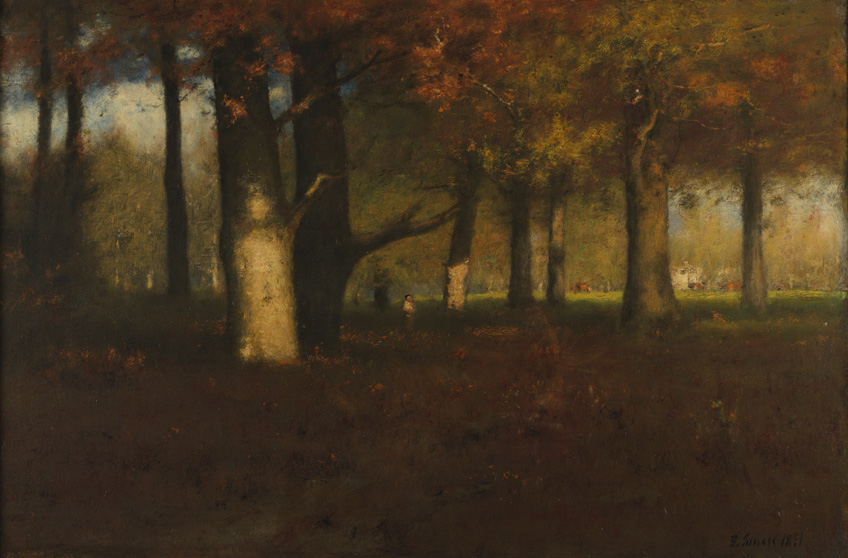
Woodland Scene
George Inness Sr.
One of the most significant artists of the late nineteenth century, Inness was an important transitional figure in the history of American landscape painting. Born near Newburgh, New York, Inness lived most of his life around New York City, settling late in life in Montclair, New Jersey. Inness had very little formal training, partially because he feared his epilepsy would prevent extended study. On a trip to France in 1854, he was deeply affected by the intimate, moody work of the Barbizon School painters. Seeking to depict the "reality of the unseen," Inness veered away from panoramic paintings of Hudson River School-type realism. By the late 1880s, he had adopted a more painterly, even abstract approach to his imagery, infusing his landscapes with a sense of quiet awe, suggesting a "correspondence" between the physical world and the spiritual, a response resulting from his adherence to the philosophy of the eighteenth-century Christian mystic Emanuel Swedenborg.
This haunting late vision, with characteristic reverential atmosphere, emphasis on shadow, lack of detail, and limited palette, reveals the artist's interest in working increasingly from his imagination rather than from direct observation. According to Inness's friend and colleague Elliot Daingerfield, the artist's strongest work was "painted out of what people fondly call his imagination, his memory...without reference to any particular nature; for he himself was nature."
Artist
Date of Birth
(1825-1894)
Date
1891
Medium
Oil on canvas
Dimensions
30 x 45 in. (76.2 x 114.3 cm.)
Accession #
1954.22.3
Credit Line
Gift of John Frederick Lewis, Jr.
Copyright
No known copyright restrictions
Category
Subject
We're so excited you're planning to visit PAFA!
Make time for art — visit us Thursday to Sunday.
Before reserving your tickets, please review helpful information about museum hours, accessibility, building access, and special admission programs.
If you have any questions, feel free to reach out to us at visitorservices@pafa.org — we’d love to help!