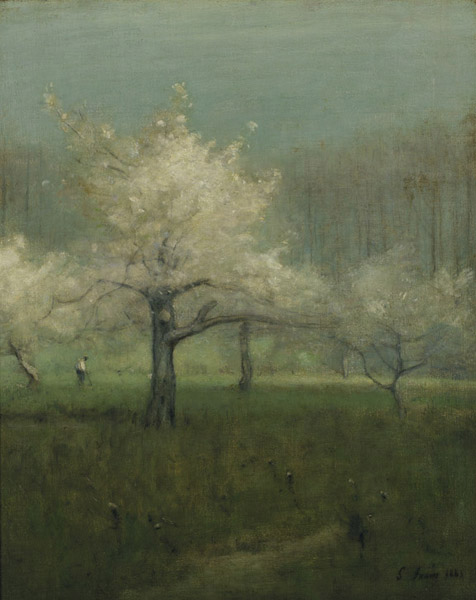
Apple Blossom Time
George Inness Sr.
Inness lived most of his life around New York City and eventually settled in Montclair, New Jersey. According to Inness’s friend and colleague Elliot Daingerfield, the artist’s strongest work was, “painted out of what people fondly call his imagination, his memory… without reference to any particular nature; for he himself was nature.” This approach treated the landscape as an inspiration for private meditation rather than a vehicle for nationalist sentiments. The emphasis on mood, usually evoked through a site that cannot be precisely identified, directed the viewer's thoughts away from hard facts or public meanings toward the artist's powers of self-expression. In both France and America, this aura of individual creativity appealed to a widening market of patrons and to critics who advised viewers to think of Inness's pictures as the ethereal visions of a poet-painter.
Artist
Date of Birth
(1825-1894)
Date
1883
Medium
Oil on canvas
Dimensions
27 1/8 x 22 1/8 in. (68.9 x 56.2 cm.)
Accession #
1952.22.2
Credit Line
Bequest of J. Mitchell Elliot
Copyright
No known copyright restrictions
Category
Subject
We're so excited you're planning to visit PAFA!
Make time for art — visit us Thursday to Sunday.
Before reserving your tickets, please review helpful information about museum hours, accessibility, building access, and special admission programs.
If you have any questions, feel free to reach out to us at visitorservices@pafa.org — we’d love to help!