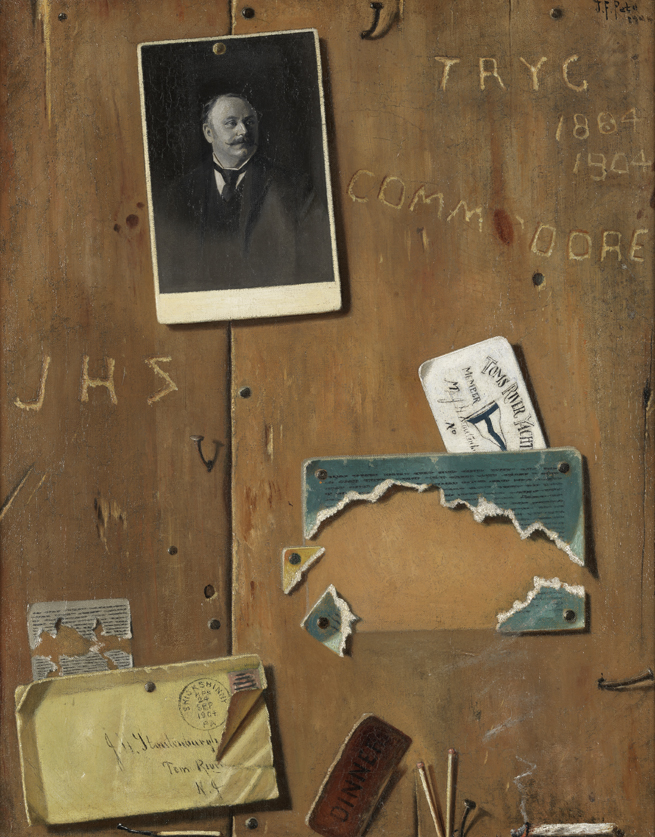
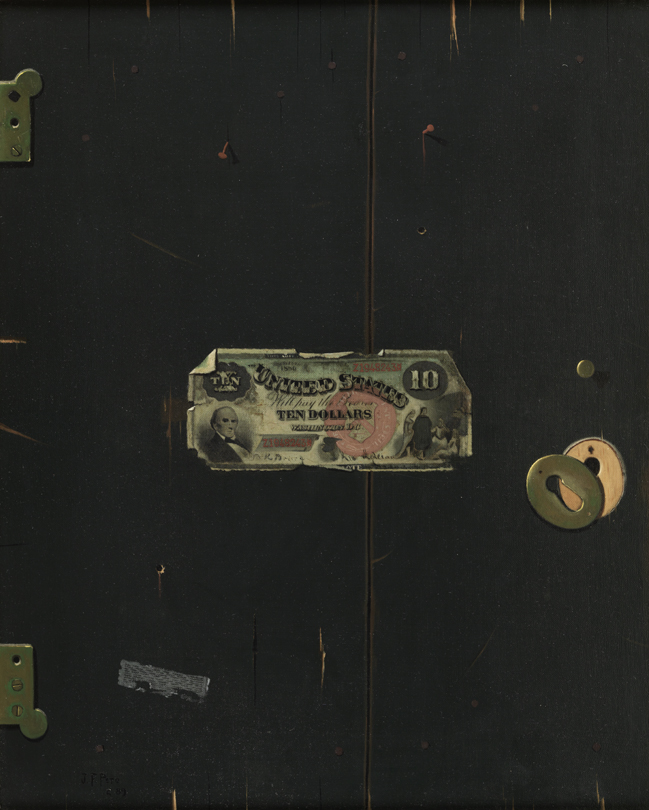
Toms River Yacht Club
John F. Peto
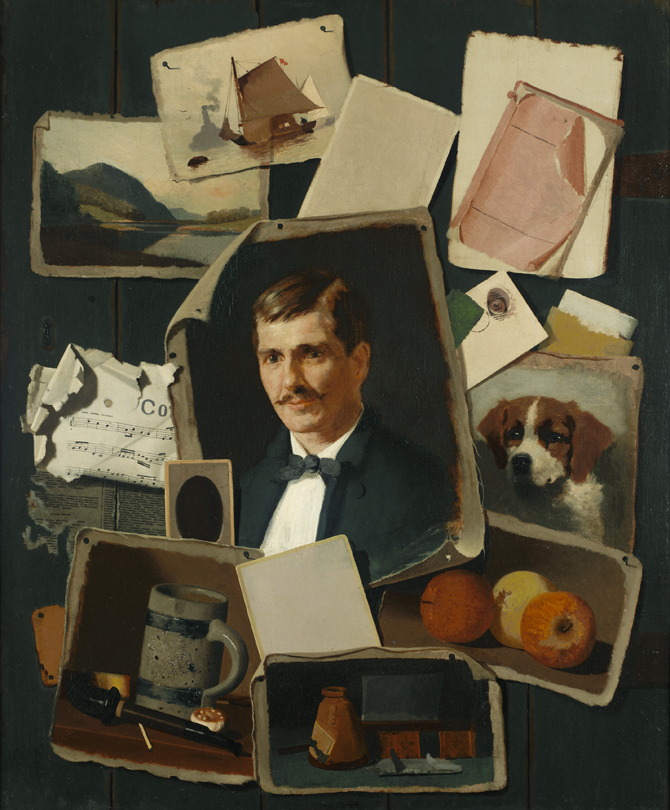
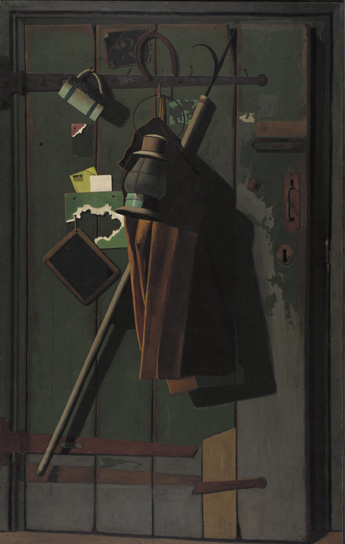
A masterful practitioner of 'trompe l'oeil' painting - a still-life genre intended to "fool the eye" into perceiving an image as a three-dimensional arrangement - Peto received little attention in his lifetime. A native Philadelphian, Peto studied at the Pennsylvania Academy and became friends with the leading 'trompe l'oeil painter William Michael Harnett. Although the older artist strongly influenced him, Peto developed his own idiosyncratic, more subjective mode of illusionist painting, softening the typically crisp edges, revealing rather than laboring to conceal brushstrokes, and showing great sensitivity to the play of light on different objects. Peto also favored worn, shabby objects for his still lifes, which were evocative but unpopular with buyers who wanted pretty images. in spite of this, dealers sometimes forged Harnett's signature on Peto's work knowing the value of the more successful artist's name.
Peto began his artistic career as a portrait photographer and divided his time between Philadelphia and Island Heights, New Jersey, where he eventually settled. Peto specialized in “rack pictures” such as this—images of photos, scraps of paper, and other detritus seemingly pinned to boards. "Toms River Yacht Club" was probably commissioned by J. H. Stoutenburgh, a wealthy Philadelphian who was the commodore of the local sailing and social club. By including carved initials referring to Stoutenburgh and the club, personal memorabilia, and a 'carte-de-visite' photograph of Stoutenburgh, Peto transformed the work from a still life into a conceptual portrait.
Artist
Date of Birth
(1854-1907)
Date
1904
Medium
Oil on canvas
Dimensions
20 x 16 in. (50.8 x 40.64 cm.)
Accession #
1989.1
Credit Line
Purchased with funds from the Bequest of Henry C. Gibson
Copyright
No known copyright restrictions
Category
Subject
We're so excited you're planning to visit PAFA!
Make time for art — visit us Thursday to Sunday.
Before reserving your tickets, please review helpful information about museum hours, accessibility, building access, and special admission programs.
If you have any questions, feel free to reach out to us at visitorservices@pafa.org — we’d love to help!