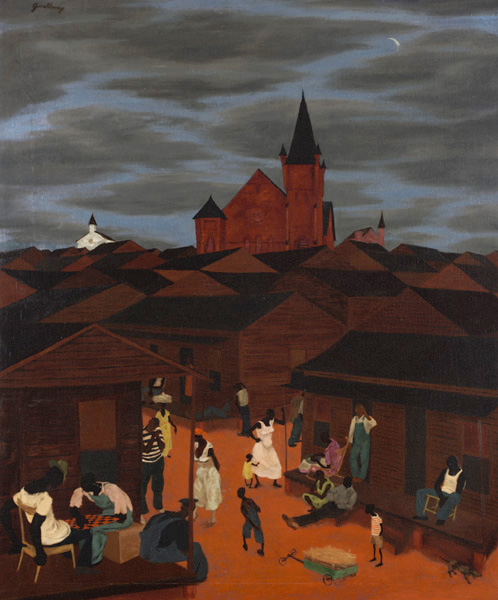
Street Scene
Robert Gwathmey
A Virginian from Richmond, Gwathmey was a social activist deeply engaged with issues of racism, political injustice, and militarism. Educated at the Pennsylvania Academy, he became involved with several radical organizations in Philadelphia concerned with the plight of the working class. In 1942, these activities led the FBI to put Gwathmey under surveillance for the next twenty-two years. He was an active participant in the Civil Rights movement and opposed the United States participation in the Vietnam War. Gwathmey formed close relationships with other socially conscious artists, such as Phillip Evergood, Jacob Lawrence, and Ben Shahn.
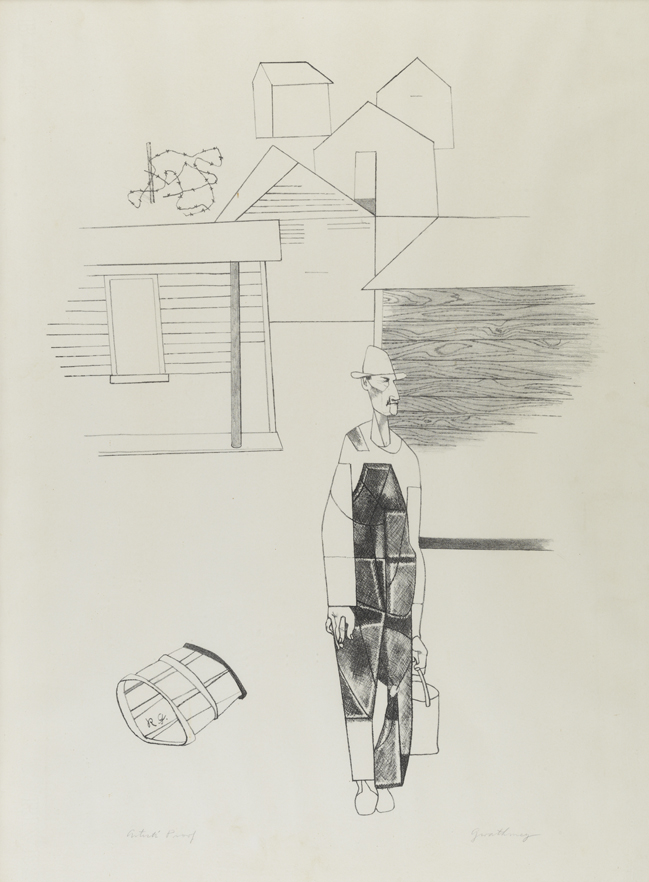
In 1938, Gwathmey destroyed many of his early paintings, feeling they were too heavily influenced by his teachers. "Street Scene" shows the subject matter and visual imagery that would preoccupy him for the next two decades: scenes of African American life in the rural South, executed in a simplified visual language rooted in folk art. Twenty figures partake in a range of early evening activities, including resting, conversation, playing checkers, and carrying laundry. The town's roofs form an abstract pattern of triangles, and three churches loom in the distance. Gwathmey's wife Rosalie was a photographer who took images of the rural South that often became the basis for his compositions.
Artist
Date of Birth
(1903-1988)
Date
1938
Medium
Oil on canvas
Dimensions
36 3/16 x 30 1/16 in. (91.9 x 76.4 cm.)
Accession #
1942.4
Credit Line
Joseph E. Temple Fund
Copyright
© Estate of Robert Gwathmey / Licensed by VAGA at Artists Rights Society (ARS), NY
Category
Subject
We're so excited you're planning to visit PAFA!
Make time for art — visit us Thursday to Sunday.
Before reserving your tickets, please review helpful information about museum hours, accessibility, building access, and special admission programs.
If you have any questions, feel free to reach out to us at visitorservices@pafa.org — we’d love to help!