Mine Disaster
Philip Evergood
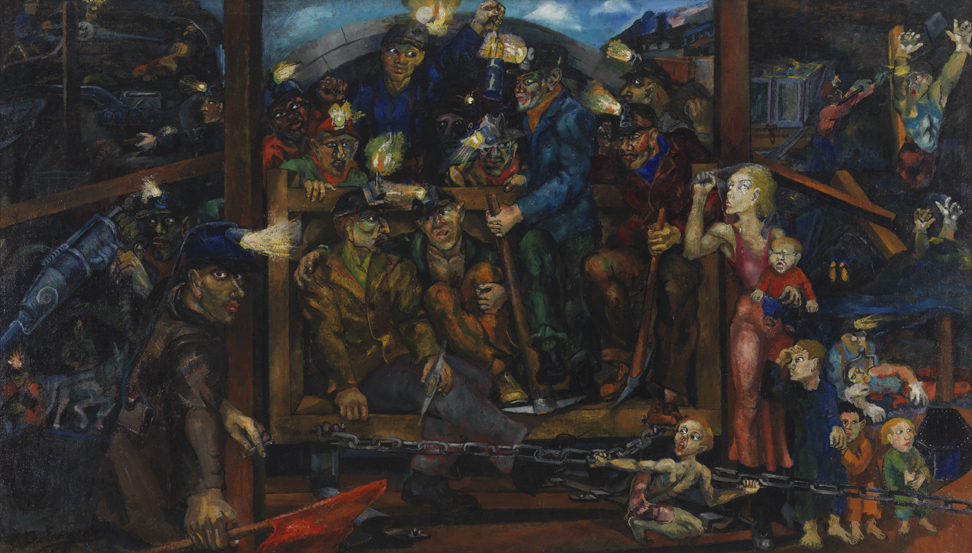
Mine Disaster is not only one of Philip Evergood’s most important works but a major example of American social realism. Long considered among the most significant easel-sized paintings of the 1930s aimed at political and humanist themes, Evergood’s painting was an appeal for his audiences to work for change in the world. It was painted for inclusion in the exhibition, “The World Crisis Expressed in Art on the Themes Hunger, Fascism, War,” held under the auspices of the leftist John Reed Club in New York City from December 1933 to January 1934. The artist held nothing back in the resulting work, ambitiously crafting an empathetic secular altarpiece to workers for an audience he hoped would consider him legitimate and authentic as a politically-committed artist.
In a letter written to National Director of the Federal Art Project, Holger Cahill, Evergood identified the three parts of his triptych-like composition, from left to right: Labor in Darkness, Rescue Squad, and Tragedy of Entombment. As he had in an earlier painting Madonna of the Mines (Regis Collection, Minneapolis), Evergood made martyrs of the miners who are forced to work in dangerous conditions in order to keep their families housed and fed.
Artist
Date of Birth
(1901-1973)
Date
1933-1937
Medium
Oil on canvas
Dimensions
40 x 70 in. (101.6 x 177.8 cm.)
Accession #
2010.1
Credit Line
Edward H. Coates Fund
Copyright
© artist or artist's estate
Category
Subject
We're so excited you're planning to visit PAFA!
Make time for art — visit us Thursday to Sunday.
Before reserving your tickets, please review helpful information about museum hours, accessibility, building access, and special admission programs.
If you have any questions, feel free to reach out to us at visitorservices@pafa.org — we’d love to help!