Architecture Talk with Michael J. Lewis
Join us May 21st for an exciting lecture from Michael J. Lewis, author of Frank Furness: Architecture and the Violent Mind, explores the vision of Frank Furness and the powerful ideas behind one of Philadelphia’s most distinctive architectural landmarks. Newly reopened after a historic renovation, we’ll see how the building is faring on its 150 birthday.
Members’ Exclusive Pre-Lecture Tour
Members are invited to an exclusive pre-lecture tour of the exterior of the Historic Landmark Building. The 30-minute experience will begin at 5 PM and conclude by 6 PM, offering a closer look at the building’s architectural details ahead of the evening’s program.
Members will meet their guide in the lobby of the Hamilton building.
REGISTRATION CLOSED
About Michael J. Lewis

Michael J. Lewis teaches modern architecture and American art at Williams College, and he is the architecture critic for the Wall Street Journal. After receiving his B.A. from Haverford College in 1980, and two years at the University of Hannover Germany, he received his Ph.D. from the University of Pennsylvania in 1989.
He has taught at Bryn Mawr College; McGill University, Montreal; and the University of Natal, South Africa. His books include Frank Furness: Architecture and the Violent Mind (2001), American Art and Architecture (2006), and the prize-winning August Reichensperger: The Politics of the German Gothic Revival (1993).
He was a Fellow of the Institute for Advanced Studies at Princeton (2000-2001) and in 2008 received a Guggenheim Fellowship to support the completion of City of Refuge (2016), his study of millennial Utopias. Lewis has been at Williams College since 1993 and in 2008 he was named Faison-Pierson-Stoddard Professor of Art.
About the Historic Landmark Building
Design
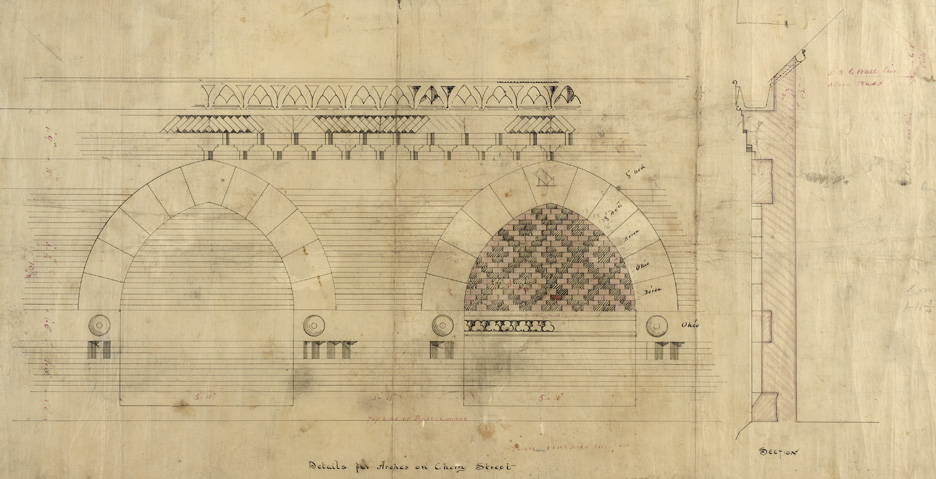
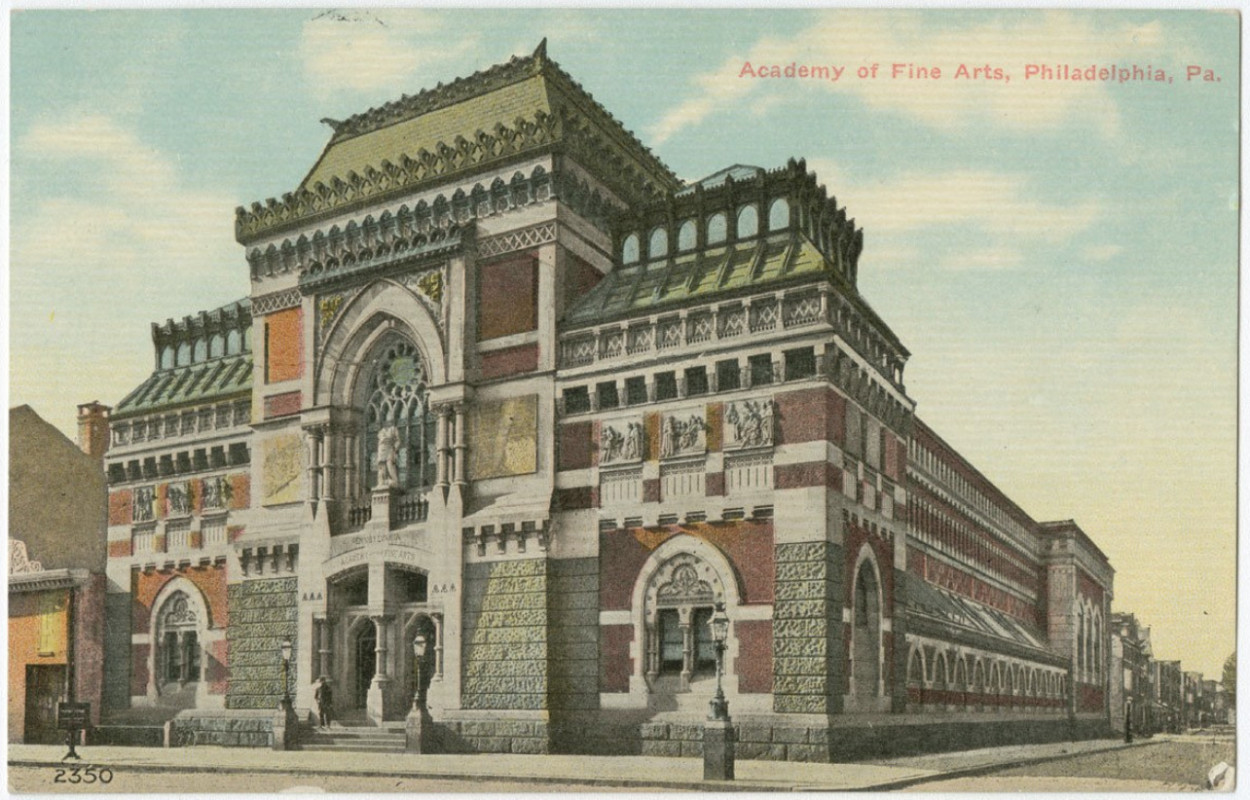
The building, designed by the Philadelphia firm of Frank Furness and George Hewitt, is generally considered to be primarily the work of Furness, who finished the project after the partnership dissolved in 1875. Furness had been a pupil of Richard Morris Hunt, who introduced him to the aesthetics of the modern Gothic revival. This included John Ruskin's appreciation of the richly colored designs of 14th-century Venice, Owen Jones's and Christopher Dresser's Eastern influenced ornament, and Viollet le Duc's use of foliated decoration combined with cast-iron architecture.
Features
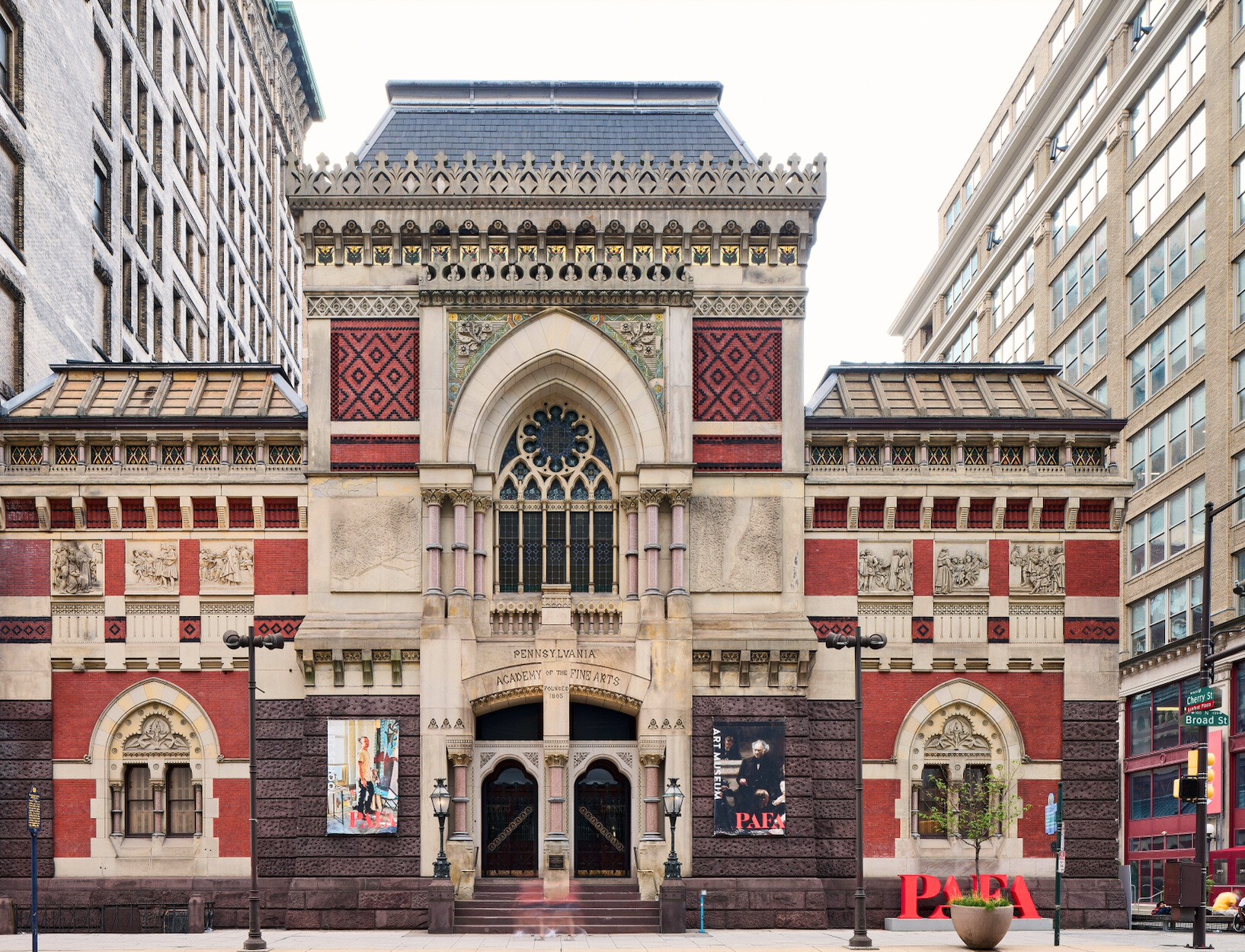
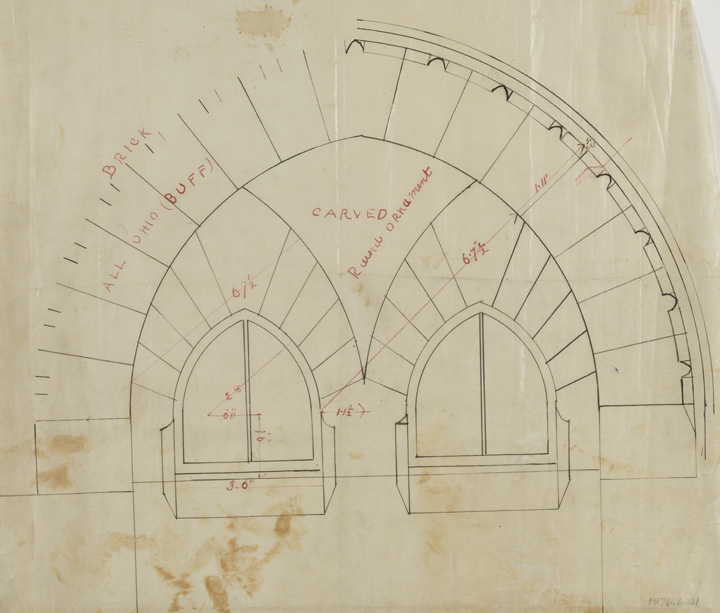
Rising 70 feet above the sidewalk, the PAFA building must have seemed a towering fortress in 1876. Today, dwarfed by more recent buildings, it looks like a decorated jewel box. On the facade, heavy courses of dark stone rise toward a roofline marked with such colorful elements as red and black brick patterning, fanciful floral motifs, and a bas-relief frieze depicting famous artists of the past. A gothic window dominates the central pavilion and creates a motif that recurs inside.
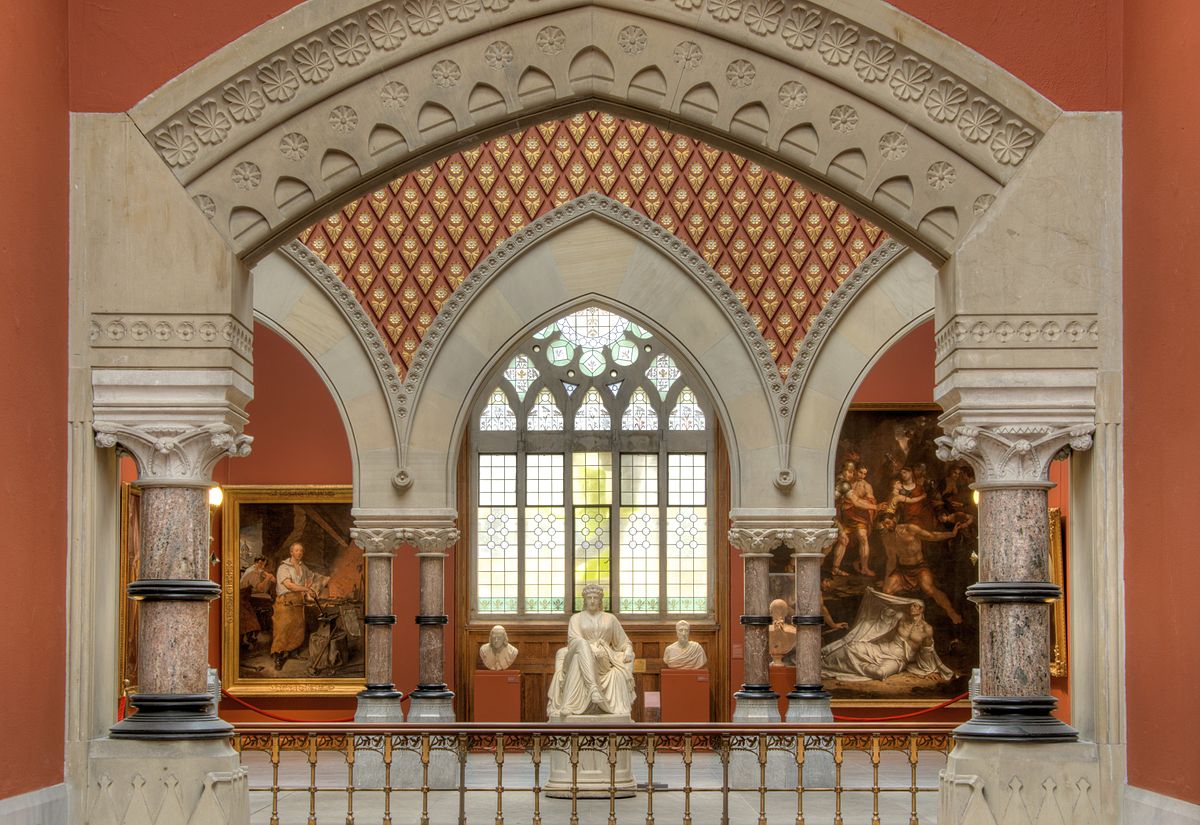
After entering through a low vaulted hall, the visitor steps into the spectacularly ornamented Grand Stairhall. Its staircase, bordered by richly tiled floor and walls, and bronze and mahogany banisters, sweeps upward to the gallery level. This grand space is ringed with gothic arches carrying gold rosette-studded walls. The vaulted ceiling above is painted a brilliant blue with silver stars. Beyond are the galleries where foliate columns support exposed steel beams, one of several radical design elements in the building.
About Frank Furness
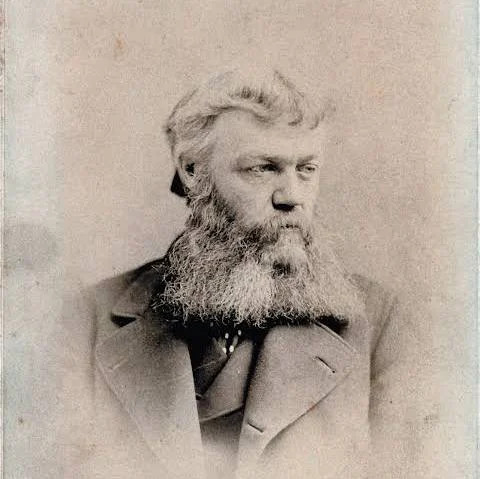
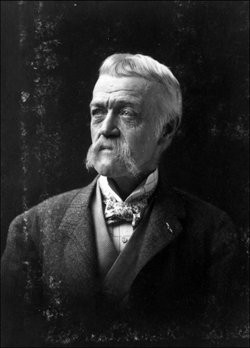
Frank Furness (1839–1912) was a transformative figure in American architecture, renowned for his bold, idiosyncratic style that challenged the traditional aesthetics of the 19th century. A Philadelphia native and Civil War veteran, Furness designed over 600 buildings throughout his prolific career, leaving an indelible mark on the city's urban landscape. His work is characterized by a muscular fusion of Gothic Revival, Neo-Grec, and industrial influences, often featuring exaggerated proportions, vibrant ornamentation, and innovative structural engineering.
Among his most celebrated achievements is the Historic Landmark Building at 118 North Broad Street. Completed in 1876 for the American Centennial, the structure is a masterpiece of High Victorian Gothic design. Furness utilized a striking palette of rusticated stone, pressed brick, and terra cotta, combined with a pioneering use of exposed ironwork that reflected the era’s technological advancements. Today, the building stands as a National Historic Landmark, serving as a testament to Furness’s genius and his role in shaping the architectural identity of Philadelphia.
Frank Furness and the Historic Landmark Building
We're so excited you're planning to visit PAFA!
Make time for art — visit us Thursday to Sunday.
Before reserving your tickets, please review helpful information about museum hours, accessibility, building access, and special admission programs.
If you have any questions, feel free to reach out to us at visitorservices@pafa.org — we’d love to help!