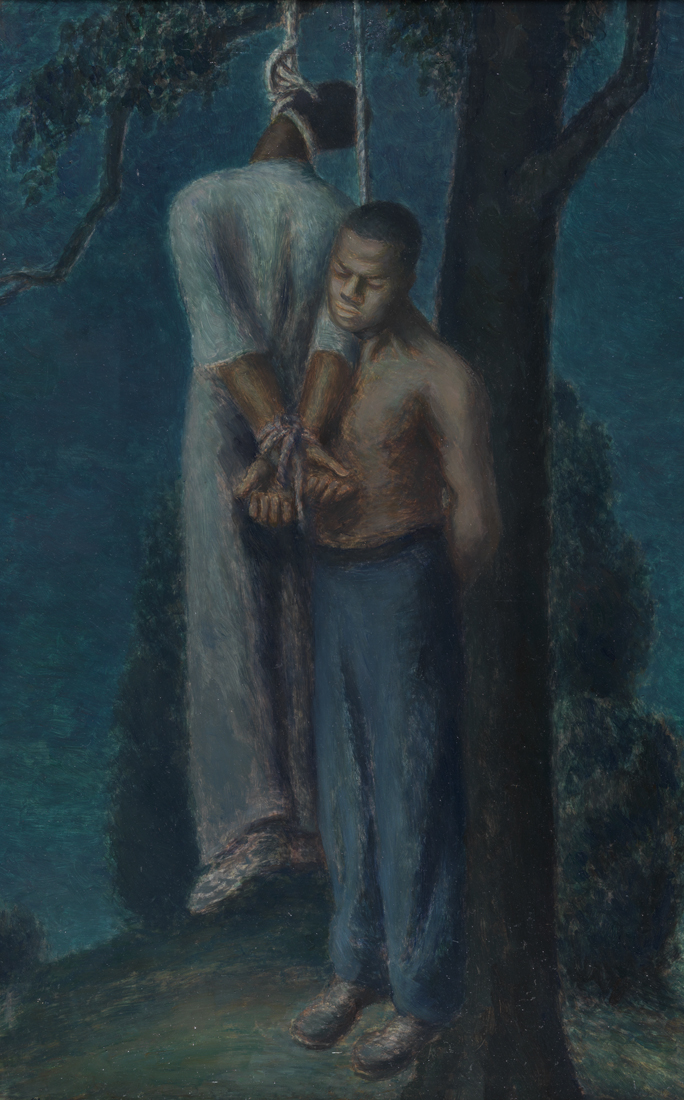
Lynching
Julius Thiengen Bloch
With the thoughtful insight of an outsider, Bloch expressed through his paintings and graphic works the divide between idealism and the reality of social injustice. The only son of a German-Jewish family, Bloch emigrated to Philadelphia at the age of five. He studied at the Pennsylvania Academy, responding particularly to the lingering influence of former instructor Thomas Eakins. Bloch was drafted into service during World War I and never fully recovered from the horrors he witnessed. His leftist politics dovetailed with the humanitarian aspects of the Works Progress Administration (WPA), the Depression-era government program for artists, for which Bloch created empathic works hailing the dignity of the individual. Bloch joined the Academy faculty in 1947.
Beginning in he 1930s, Bloch increasingly turned to African-American subject matter in his work. In 1935 he played an instrumental role in organizing the NAACP's exhibition "An Art Commentary on Lynching," protesting this atrocity that had come to be viewed as a prime symbol of racism in America. He explored the disturbing theme in a number of works, including "The Lynching," 1932, now in the Whitney Museum of American Art, a work that significantly enhanced Bloch's reputation.
Artist
Date of Birth
(1888-1966)
Date
1936
Medium
Oil over egg tempera on gessoed board ("Renaissance Panel")
Dimensions
25 1/16 x 16 in. (63.7 x 40.6 cm.)
Accession #
1958.5
Credit Line
Gift of the Free Library of Philadelphia
Copyright
© artist or artist's estate
Category
Subject
We're so excited you're planning to visit PAFA!
Make time for art — visit us Thursday to Sunday.
Before reserving your tickets, please review helpful information about museum hours, accessibility, building access, and special admission programs.
If you have any questions, feel free to reach out to us at visitorservices@pafa.org — we’d love to help!