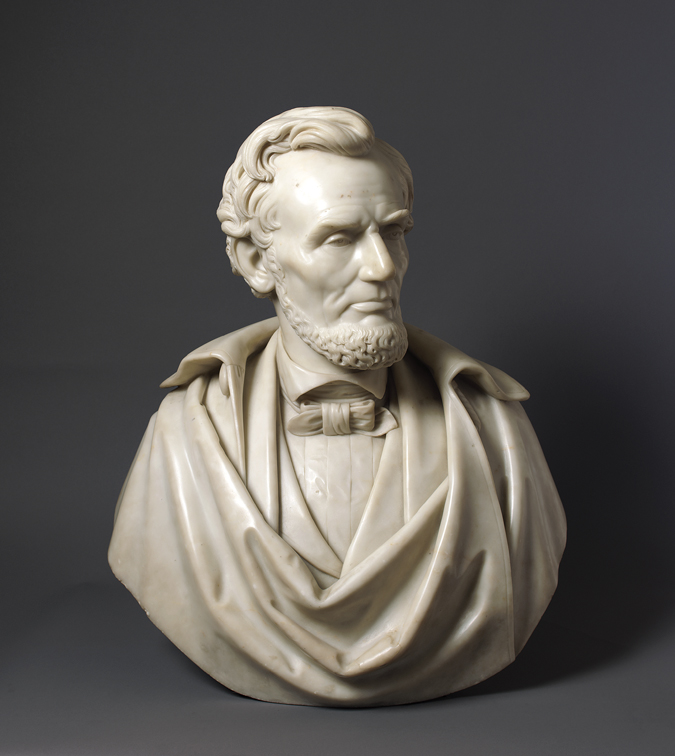
Abraham Lincoln
Randolph Rogers
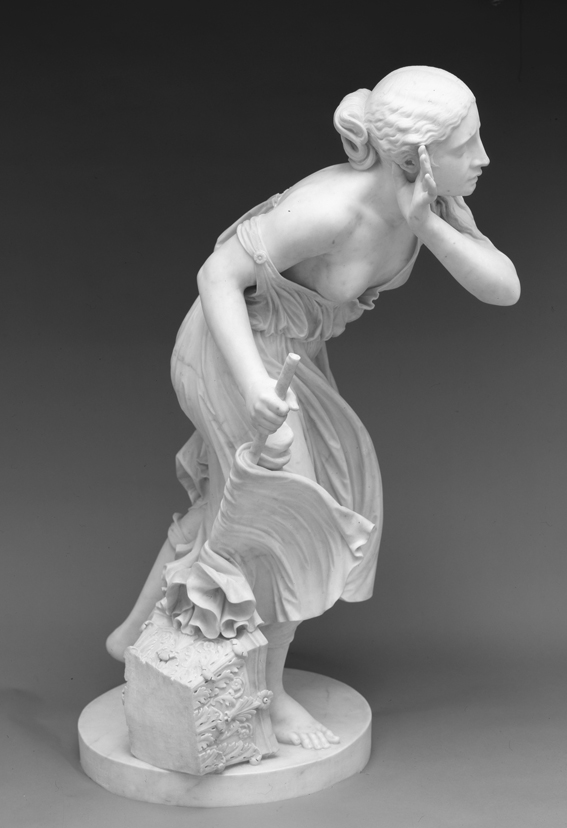
Like many American sculptors of his generation, Randolph Rogers spent most of his professional life in Rome, where wealthy Americans on the Grand Tour frequented his studio. His most popular works expressed the romance and pathos that Victorian audiences, especially his countrymen, found so appealing. In addition to treating literary subjects such as "Nydia, the Blind Girl of Pompeii" (also in the Academy's collection), he produced many commemorative monuments. After President Lincoln was assassinated, Rogers received a commission from the City of Philadelphia to design a memorial to the slain leader. His bronze statue of a seated Lincoln holding the Emancipation Proclamation was placed in Philadelphia's Fairmount Park in 1871. The statue was modeled from this apparently unique portrait bust of Lincoln, which was commissioned by the Philadelphian Richard D. Wood and donated to the Academy in 1866. Rogers drew from various sources for the likeness, but he added his own Neoclassical touch. Although Lincoln is portrayed in contemporary dress, the fall of his cape suggests the drapery swags seen on busts of ancient Roman orators and philosophers.
Artist
Date of Birth
(1825-1892)
Date
ca. 1866
Medium
Marble
Dimensions
28 x 23 x 17 1/4 in. (71.12 x 58.42 x 43.815 cm.)
Accession #
1866.1
Credit Line
Gift of Richard D. Wood
Copyright
No known copyright restrictions
Category
Subject
More by Randolph Rogers

We're so excited you're planning to visit PAFA!
Make time for art — visit us Thursday to Sunday.
Before reserving your tickets, please review helpful information about museum hours, accessibility, building access, and special admission programs.
If you have any questions, feel free to reach out to us at visitorservices@pafa.org — we’d love to help!