STORIES FROM PAFA
PAFA’s Tradition of Installation Photography
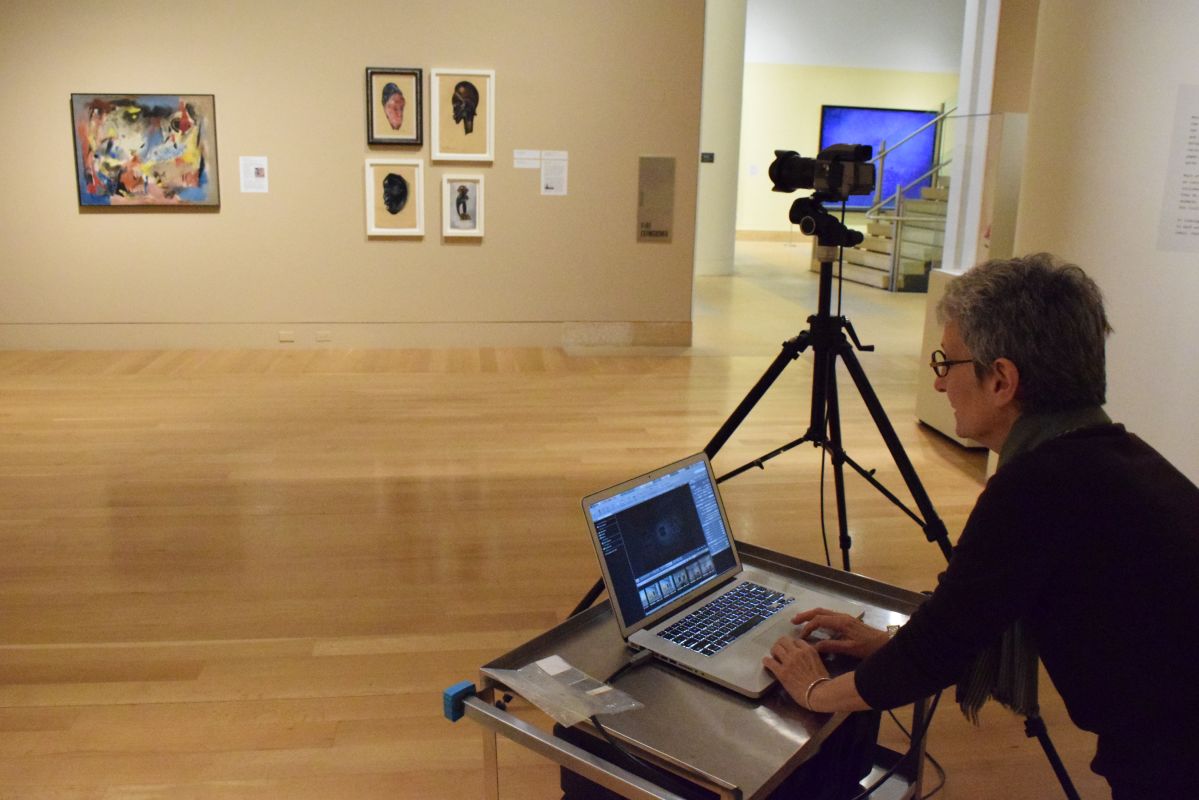
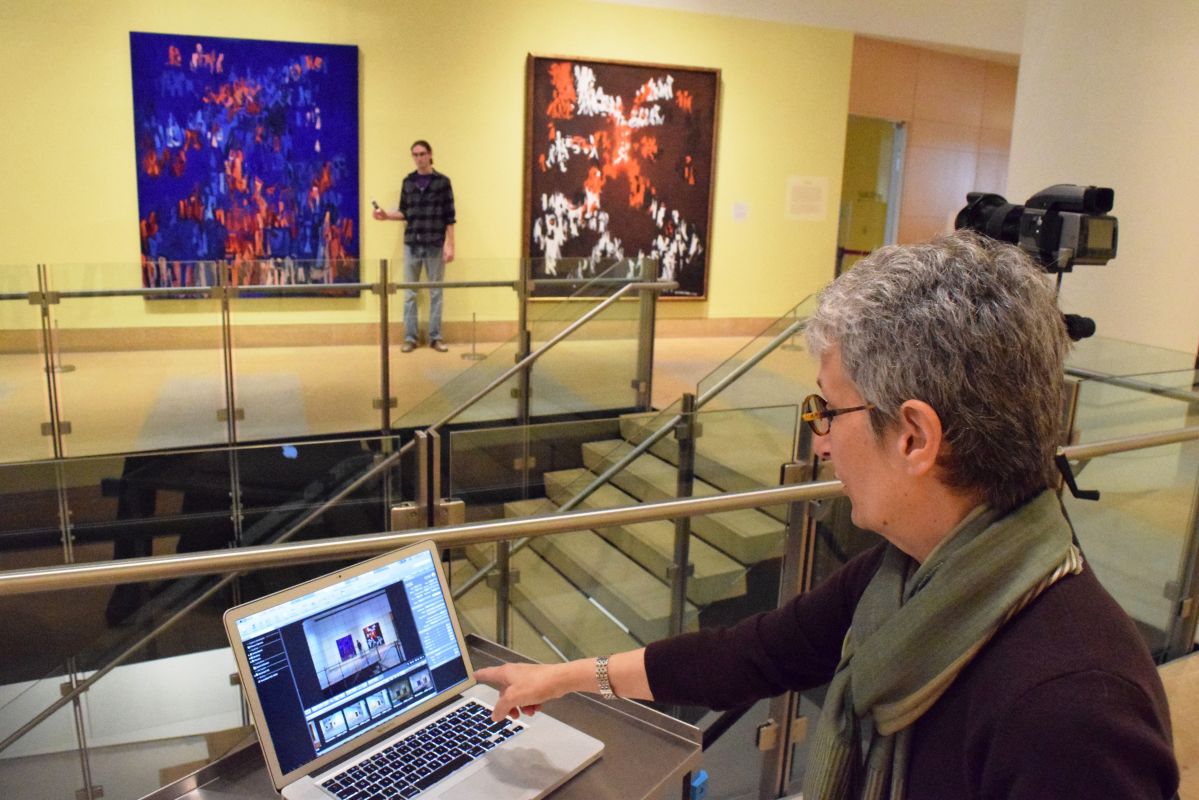
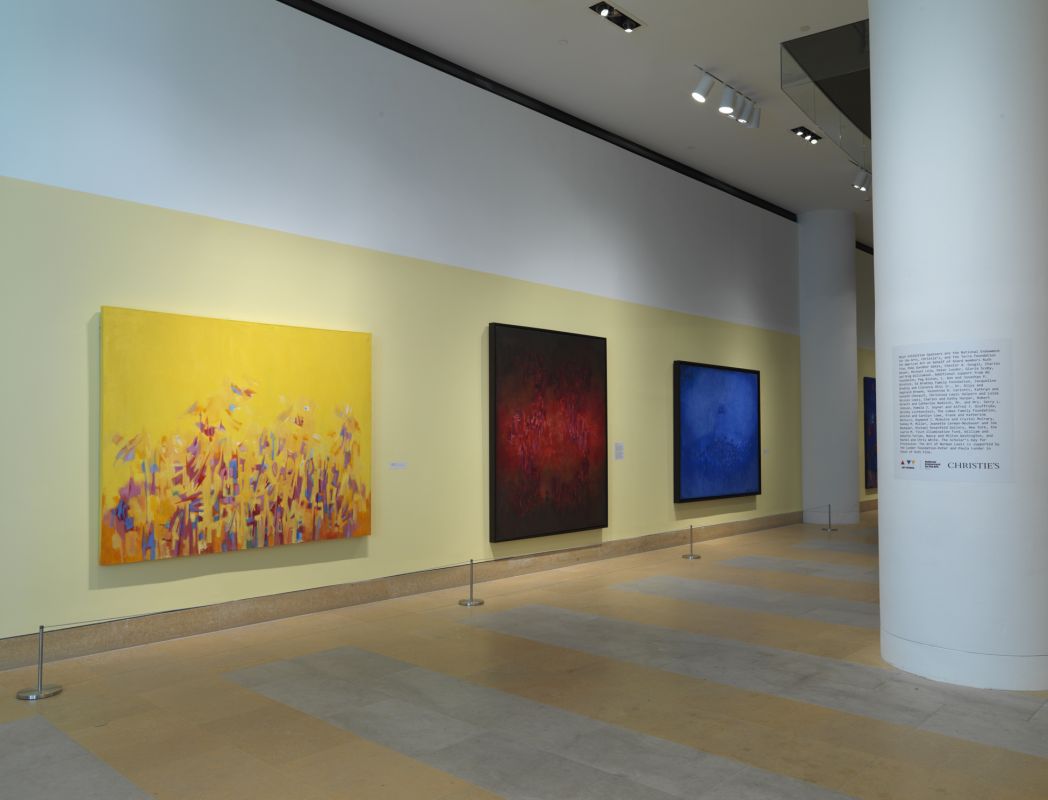
Less than a week after the opening of Procession: The Art of Norman Lewis last November, Barbara Katus, PAFA’s Manager of Imaging Services, was methodically making her way through the exhibition with the help of her work study student, Gary Pergolini. A Hasselblad H4D digital camera was mounted on a tripod and tethered to a laptop on a rolling cart, enabling Katus to see and edit the images of Lewis’ vibrant works as she captured them on screen. This is the process of installation photography, and although the technology has changed dramatically over the years, this practice dates back to the late 19th century at PAFA.
For each shot, Katus conferred with her student apprentice, who then made adjustments on the camera and occasionally stood before a work holding a strip of colors in order to obtain an accurate reading. Katus, meanwhile, kept her eyes on the screen, using grid lines, a live video feed, and a high-powered zooming tool to focus and capture a 16 bit, 300 megabyte image file.
“The purpose of this type of photography,” said Katus, who has been doing installation photography at PAFA for the past five years, “is to document the exhibition section by section in order to create and preserve a record of the content and the way in which it was designed and installed.”
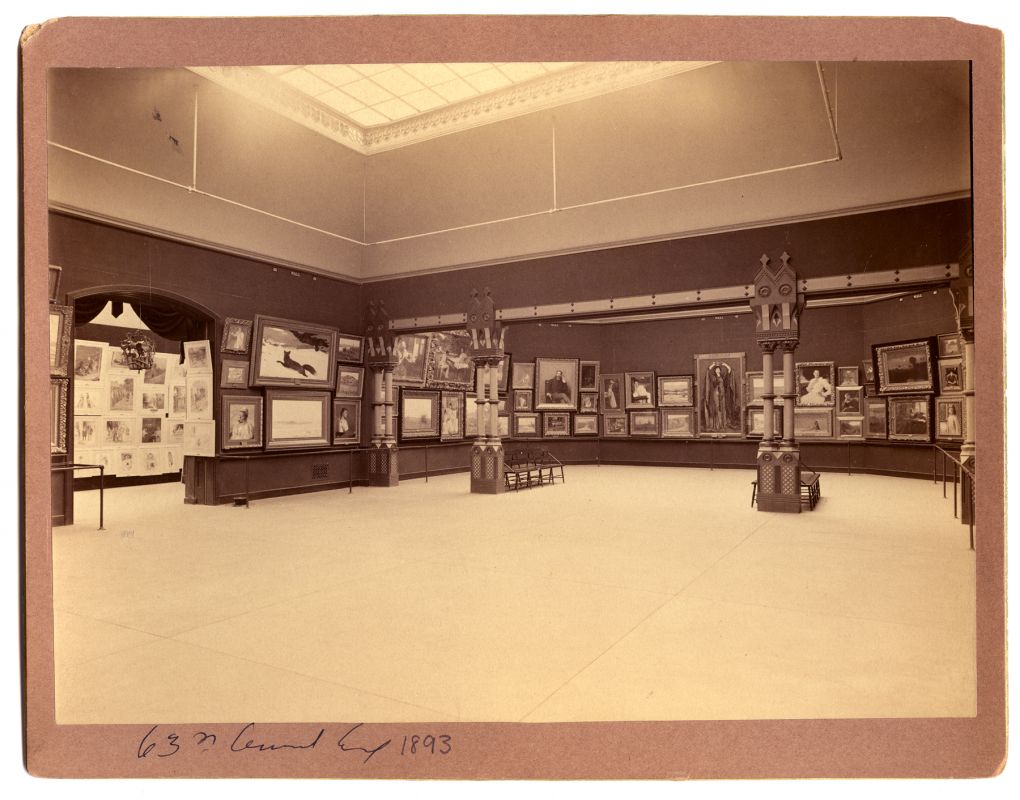
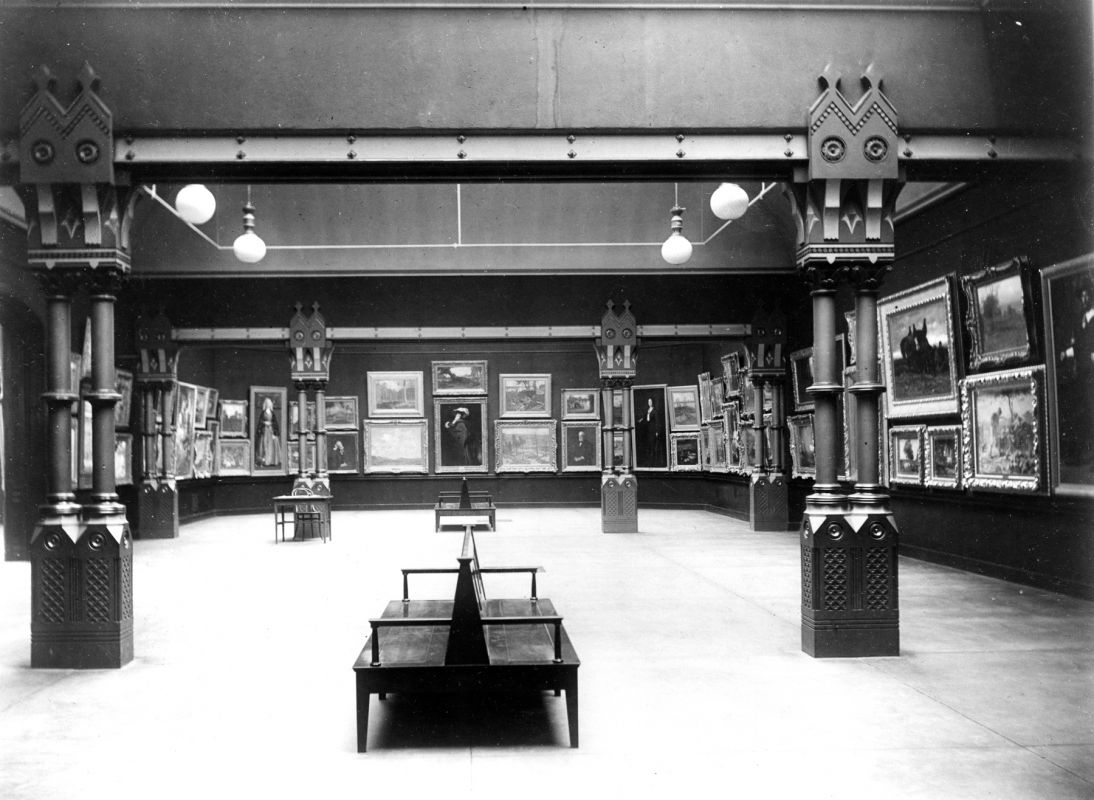
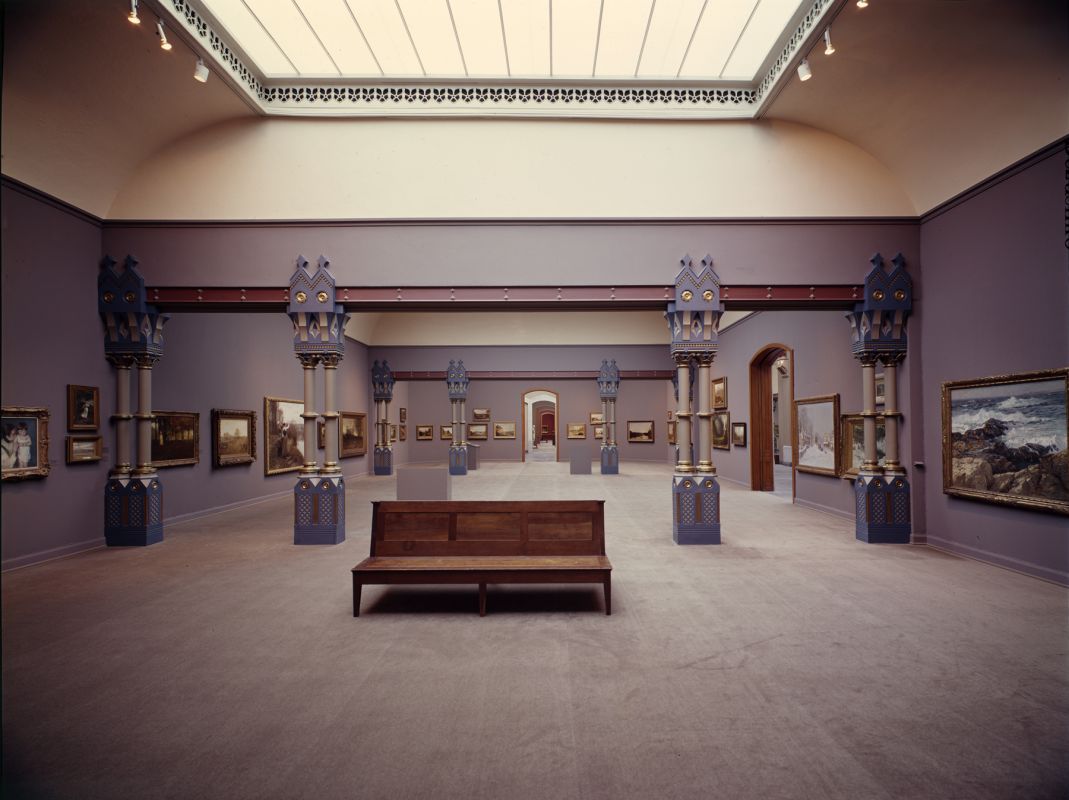
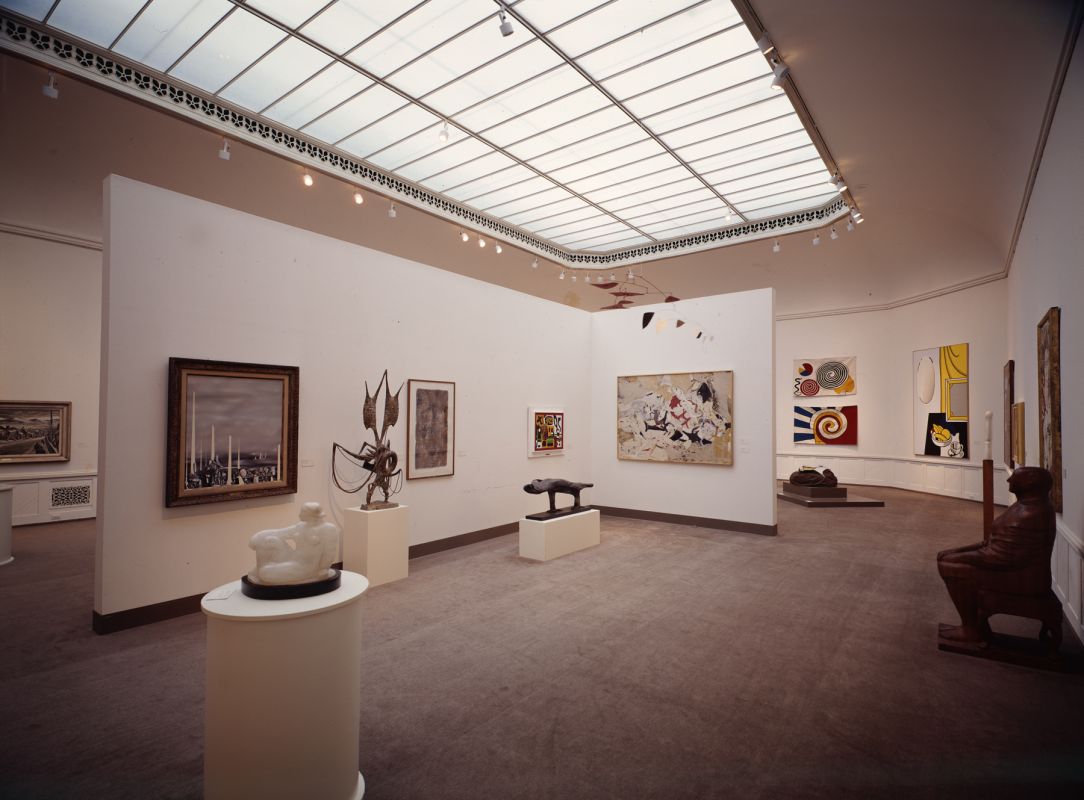
PAFA has traditionally documented both special exhibitions and its renowned Annual Exhibitions, the photos of which can be found in PAFA’s Archives. According to In the Service of Art: A Guide to the Archives of the Pennsylvania Academy of the Fine Arts, written by former PAFA archivist Cheryl Leibold, some of the earliest installation photographs still in existence date back to the Annual Exhibition of 1877. These photos have become a treasure trove for preserving PAFA’s storied past.
Interestingly, Katus noted that while installation photography continues to focus on creating an exhibition’s historic record, the rise of social media has necessitated these photos to be aesthetically pleasing as well. “There’s no reason the images cannot serve the dual purposes of documentation and promotion,” Katus said.
Meanwhile, storage continues to be an important issue, not only for installation photography, but for all digital assets. Even the best storage devices are not foolproof, meaning that Katus and her colleagues at PAFA are faced with the challenge of finding the best possible method to store and maintain digital files and to migrate the files to better and better storage devices as technology changes and improves. “These are just machines,” Katus said, “so the challenge is the ongoing commitment to the maintenance and preservation of digital images -- can we make these images last forever?”
Written by ZP Heller
February 4, 2016
Read more PAFA Perspectives.
We're so excited you're planning to visit PAFA!
Make time for art — visit us Thursday to Sunday.
Before reserving your tickets, please review helpful information about museum hours, accessibility, building access, and special admission programs.
If you have any questions, feel free to reach out to us at visitorservices@pafa.org — we’d love to help!